
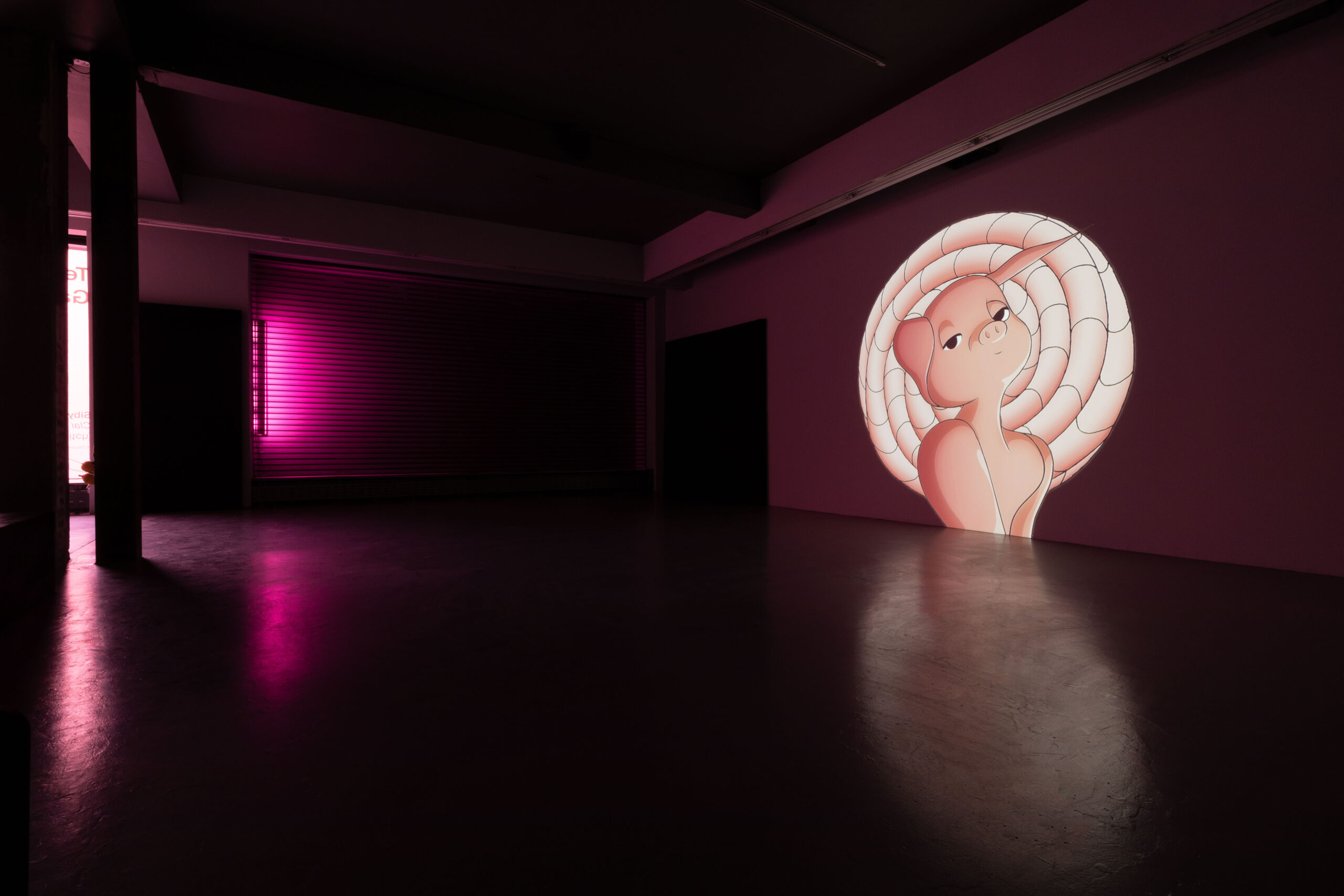
Exhibition view: Claí na Péiste (Worm’s Ditch)
Temple Bar Gallery + Studios (TBG+S), Dublin
Photo: Bowe O’ Brien



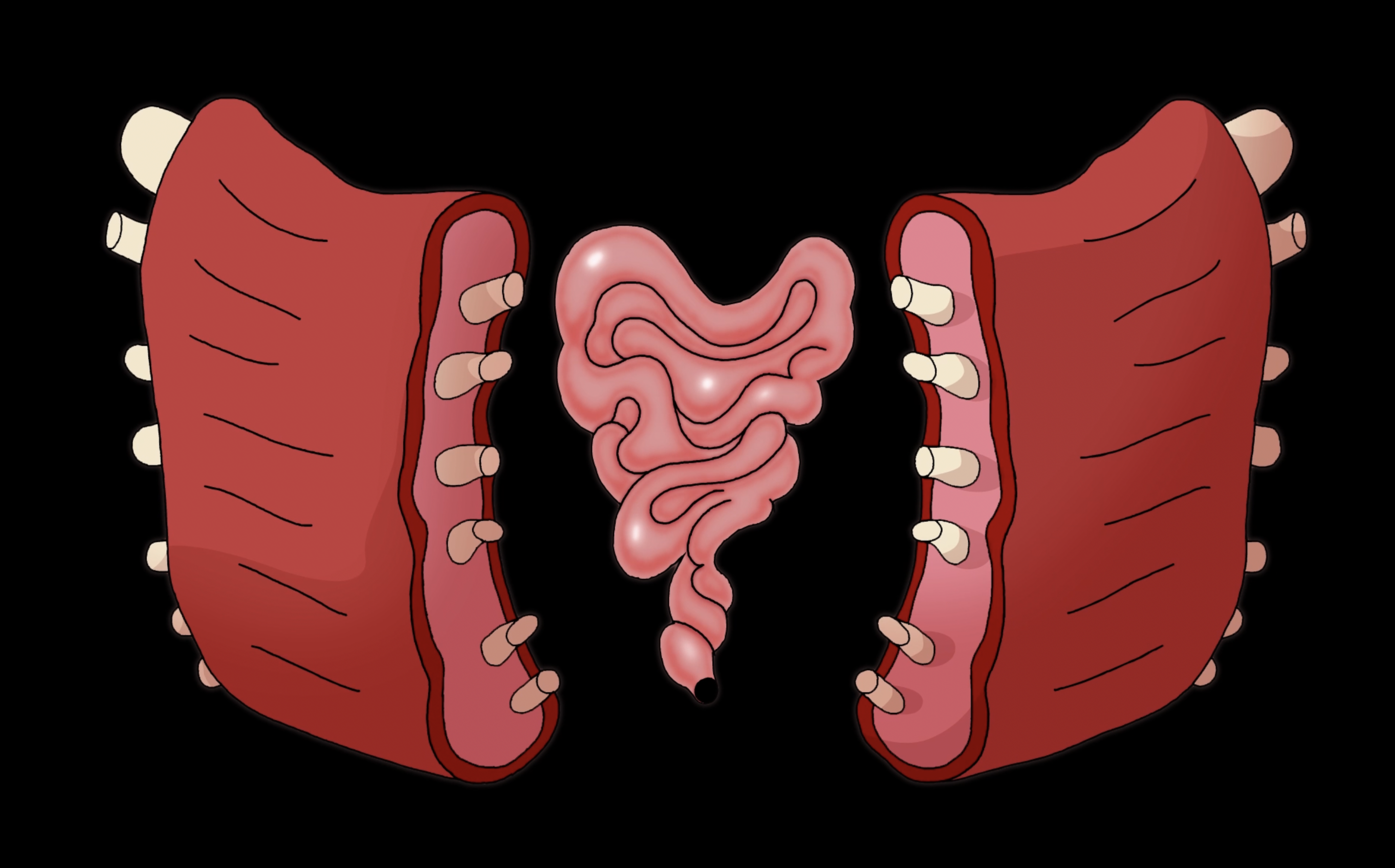
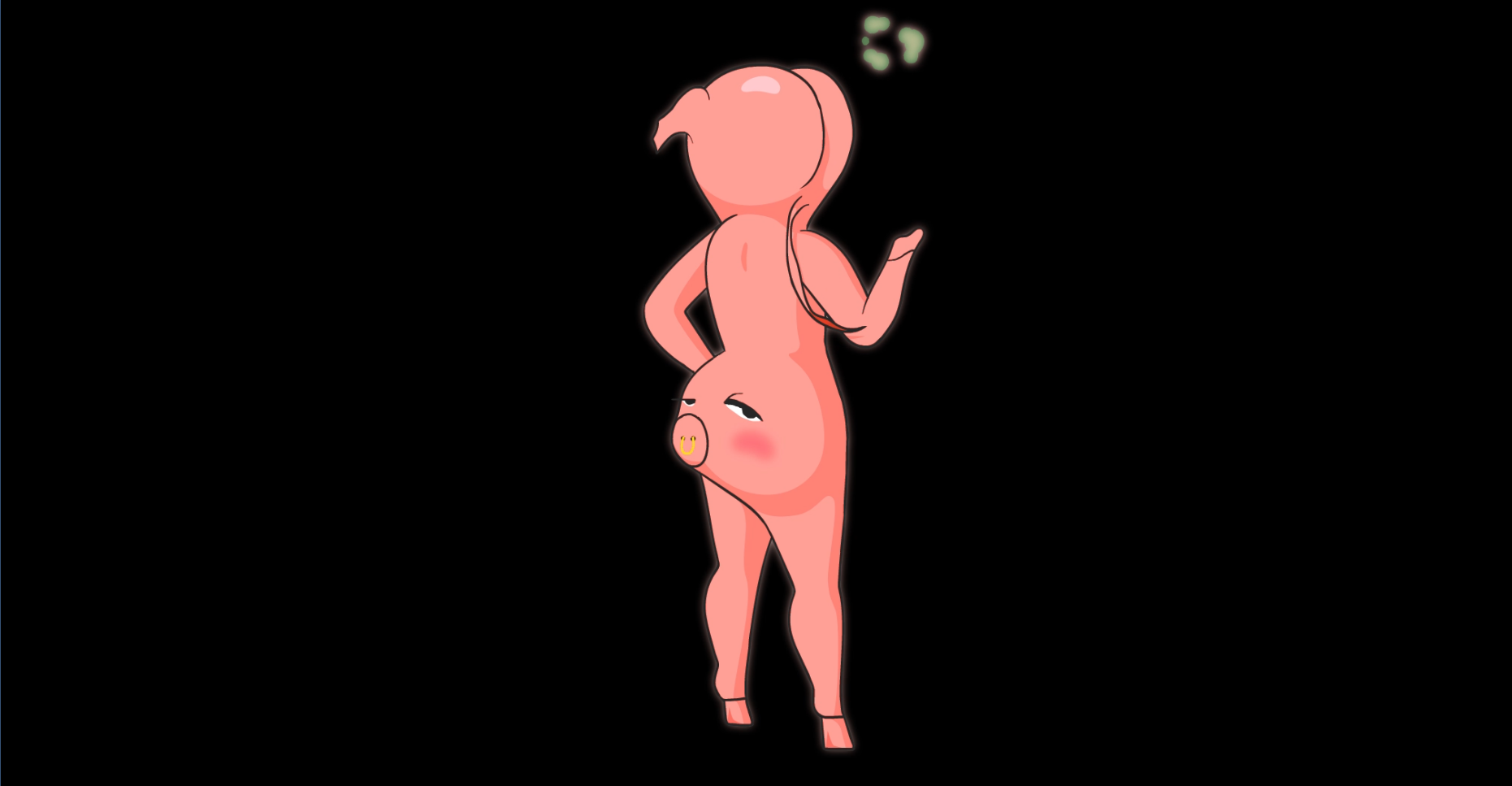
Claí na Péiste (Worm’s Ditch) Production Still
2 Channel HD Video Surround Sound
Duration 22 min



Claí na Péiste (Worm’s Ditch)
This is a tale of a pig. A tale that corkscrews and spirals over and under ground, through centuries of shifting values and beliefs, and different psychological states.
Sibyl Montague’s Claí na Péiste accumulates culturally symbolic references to the pig in Irish folkloric storytelling, everyday life and contemporary ecology. The ubiquitous and day-to-day integration of pigs and their representation sits at odds with the concentration of pork farming across the country, bringing to the surface deep and conflicted underlying societal relationships to nature.
Montague employs a range of traditional and digital animation in this film installation, with hand illustration, CGI, and puppetry. The film’s narrative focuses on inter-species relationships and human connections to animals as both product and kin. Referring to early-Irish legends that tell of journeys of growth and transformation, Montague ushers us through models of quantum entanglement, or wormholes. These references to echtrae (adventures) and immram (voyages) to otherworlds of Tír na nÓg (Land of Youth) and Magh Meall (Plain of Joy), inform the dreamlike pacing and structure of the film.
Claí na Péiste’s pig and worm characters shapeshift between timelines that chronicle their personification and experiences in a world designed to confine and control them. Together they channel dualistic perspectives of spirituality, progress, decline, cruelty, and magic in the Irish cultural landscape. Montague’s focus on decolonial approaches to iconography and linguistics re-aligns knowledge from national collections, rural and ancestral communities, archaeology and megalithic sites.
The exhibition’s title refers to the early-Irish literature of the Claí na Péiste (Worm’s Ditch) or Claí na Muice Duibhe (Black Pig’s Dyke), an ancient earthwork that spans the northern midlands of Ireland, demarcating Ulster and Connacht. The ditches take their names from Gaelic folklore with varying localised beliefs of their origin. One account describes how a giant wild boar churned up the furrow with his tusks. Another attributes the earthworks to a large oll-phéist, or serpent, in a story recorded by the Folklore Commission in Monaghan and Cavan in the 1930s. One theory proposes that the earthworks were built to prevent cattle raids over the borders of opposing clans. Remnants of the enormously extensive trench can still be found in Leitrim, Longford, Cavan, Monaghan, and Fermanagh, at times bypassing overground borders and other manmade constructs. Read full text here
Credits
Artwork: Sibyl Montague
Animation: Keith Kavanagh
CGI Animation: Andrew Loughnane
Compositing and effects animation: Aoife Balfe and Rory Kerr
Green Screen: Co directed by Sibyl Montague and Karyn Hunt
Puppets: Sibyl Montague
Performer 01: Aoibhinn O’ Dea
Performer 02: Jack Rogers
Camera and lighting: Luke Faulkner
Camera assistant and stills: Leigh Arthur
Wardrobe: Aoife Ward
Production assistants: Aoife Ward and Jack Rogers
Editor: Rory Kerr and Sibyl Montague
Sound: Sibyl Montague
Sound Mastering: John Beattie
Production consultant: Aoife Balfe and Leigh Arthur
Music:
Sing It Back – Moloko / Róisín Murphy
Ceoltóirí Chualann – Spailpín, A Rúin agus an Londubh
Paddy Tunney – Rockin’ The Cradle
Seán Ó Riada / Ceoltóirí Chualann – The Exile’s Jig
Joan Clancy – Dowdling.
Commissioned by Temple Bar Gallery and Studios (TBG+S) Dublin, Ireland 2022.
Claí na Péiste was made possible through a Project Award funded by the Arts Council Ireland.
